
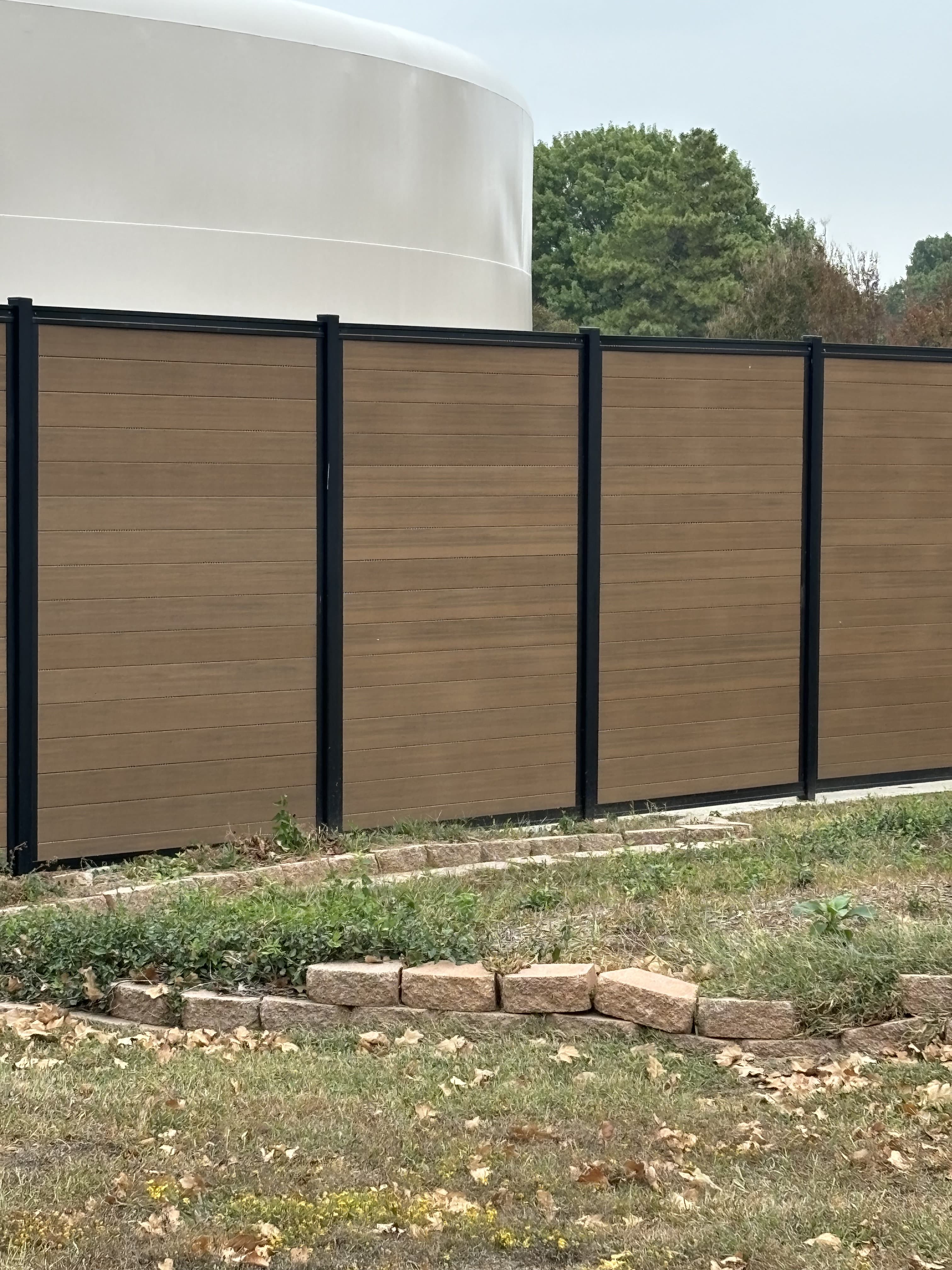
Commercial fence perimeter with clean modern lines and controlled access points.

Commercial Privacy Fence and Screening

Commercial Privacy Fence and Screening Systems

Perimtec helps commercial buyers plan framed privacy fence systems for equipment enclosures, dumpster enclosures, mechanical screening, business perimeters, multifamily properties, HOA/community areas, and light industrial sites that need a cleaner long-term appearance.

What Commercial Buyers Usually Need

Commercial fence projects often need more than a property-line barrier. They need privacy where the public sees service areas, durable framing for long runs, access gates that work for crews, and materials that can be maintained or phased without rebuilding the whole enclosure.

  • Consistent framed sections across long perimeter runs and phased site work.
  • Screening levels matched to tenant privacy, operations, mechanical areas, and customer-facing edges.
  • Gate placement coordinated with deliveries, staffing flow, trash service, and maintenance circulation.
  • Replaceable infill and lower routine upkeep than many wood-only commercial builds.

Common Commercial Use Cases

  • Equipment enclosures for HVAC units, generators, pool equipment, meters, and mechanical pads.
  • Dumpster enclosures and service yards that need privacy plus frequent-use gate access.
  • Business perimeter fencing for office, retail, warehouse, and mixed-use properties.
  • Multifamily, HOA, and community areas where consistent screening and appearance standards matter.
  • Light industrial lots that need cleaner boundaries, controlled visibility, and durable framed sections.

Why the Framed System Helps Commercial Projects

Steel posts and coordinated framing help the fence look intentional while keeping future service needs practical.

Cleaner Appearance

Organized posts, rails, panels, and gates create a finished look for customer-facing boundaries and shared site areas.

Replaceable Infill

When an area is damaged or a site standard changes, infill can be addressed more directly than many one-off wood builds.

Stronger Posts and Gate Integration

Gate openings, service access, and heavier privacy infill are planned with post strength and hardware needs from the start.

Useful for Phased Work

A system approach makes it easier to plan sections by building phase, enclosure zone, or funding sequence.

Choosing the Right Commercial System

  • Choose the steel frame system when the project needs wood, composite, corrugated metal, vinyl, or designer metal infill inside stronger posts and framing.
  • Choose corrugated or designer metal infill when the site needs a crisp commercial screen with less wood maintenance.
  • Choose wood or composite infill when warmer appearance matters but the project still needs a steel-backed frame.
  • Consider the dedicated steel privacy fence path when a uniform single-color steel screen is the right fit for long perimeter or utility screening goals.

For privacy-first scopes, compare the broader metal privacy fence options before locking in an infill direction.

Gate and Access Planning

  • Map pedestrian, vehicle, service, and dumpster gate locations before finalizing post and panel layout.
  • Confirm single vs double gates, clear opening width, latch side, hinge side, and required maintenance access.
  • Plan stronger gate posts and hardware where gates will see frequent commercial traffic or heavier infill.
  • Keep gate appearance consistent with the fence infill where the opening is visible to tenants, customers, or neighbors.

Review fence gate options early so enclosure and perimeter zones stay consistent.

Wind, Posts, and Privacy Level

Solid privacy panels catch wind, especially on exposed lots, rooftops, long straight runs, and tall screens. Confirm height, post spacing, footing assumptions, corners, and local exposure before selecting infill.

Match the privacy level to the zone: full screening for dumpsters, mechanical yards, and service pads; more design flexibility for storefront edges, amenity areas, and neighborhood-facing transitions.

Project Planning Workflow

  1. Define screening level by zone: perimeter edge, amenity area, utility yard, equipment pad, and entry frontage.
  2. Map vehicle and pedestrian gate locations before finalizing post and panel layout.
  3. Confirm wind exposure, solid-panel height, post assumptions, and long-run layout constraints.
  4. Align infill direction, height, and finish package with code requirements, maintenance goals, and use case.
  5. Confirm quote scope with gate count, critical clearances, phased installation needs, and budget expectations.

Need to Scope a Commercial Fence Project?

Share site zones, access points, privacy needs, and timeline so we can help shape a practical commercial solution.

Request a Quote